
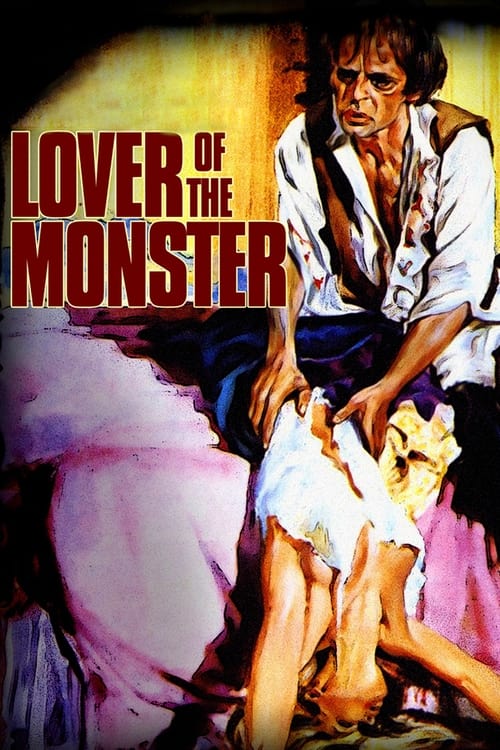

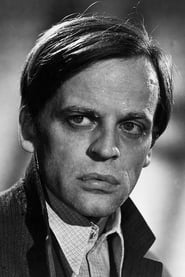

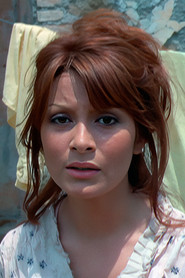


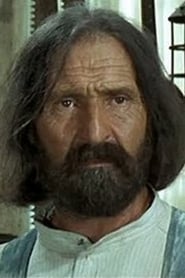

Dr. Alex Nijinski moves with his wife Ann into the mansion of her father. In the building's basement, the doctor discovers the old owner's laboratory, a scientist who studied to uncover the secrets of life beyond death. Reading the man's diary, Alex is seized by murderous raptures that transform him into a psychopathic madman who begins to reap victims in the surrounding countryside of the mansion. It's really a mess that Sergio Garrone directed in 1974 alongside "The Hand That Feeds Death". If the latter was a decent gothic film in the vein of "Eyes Without a Face", filled with gore and eroticism – as the local tradition of the time demanded –, "The Monster's Lovers" is instead a confusing and uninspired casserole of trinkets that wants to be a revisitation of "The Strange Case of Dr. Jekyll and Mr. Hyde" but ends up resembling more a gothicized and boring version of "The Cross of Seven Stones". The flaw at the base of "The Monster's Lovers" is the lack of a real idea, which is evident from the convoluted narrative construction of the film that initially presents a story that goes off on a tangent to then become a static and repetitive sequence of ridiculous situations. At first, Garrone seems to want to explore Frankensteinian territories, with the discovery of a laboratory where experiments on the creation of life were conducted and many machines that sent electric discharges; then, suddenly and without a real reason – no explanation is provided and everything seems very implausible –, the story shifts towards the aforementioned Stevenson novel, with a Klaus Kinski who brings out his second personality and transforms from time to time into a murderous beast. If the narrative development lacks coherence and the suspension of disbelief refuses to play its part, at least the attempt to create a parallel between the character repression of the man, an acquired noble jealous of his beautiful wife but sexually impotent, and his uninhibited personality that manifests itself violently is appreciable. Too bad that the idea is nevertheless trite and marginal in the development of the plot. Numerous are the scenes of involuntary ridicule, which often feature enraged mobs of peasants ready to lynch poor chicken thieves and a Klaus Kinski with wide eyes who delivers judo blows to his victims. The poverty of the entire operation is evident in every single frame, between sets recycled from some western film (?) and interiors that should be gothic but are those of a bare villa rented abroad for a few bucks. Not even the exploitative components manage to save this film from failure, since the typical violence of these Italian productions of the 1970s is here completely absent and the prurient scenes that were another trademark are seen drop by drop and are, moreover, all poorly shot. Klaus Kinski does his best as usual and certainly no criticism can be leveled at him, except that he accepted to participate in such a ramshackle film. Completing the cast is a Katia Christine ("The Designated Victim"; "The Hand That Feeds Death") who is irrelevant and an unbearable Ayhan Isik ("The Hand That Feeds Death") in the role of Dr. Igor, the protagonist's rival in love. In short, "The Monster's Lovers" is a poor example of Italian genre cinema: without ideas, without means, and even boring in its sterile cyclicality of situations. Garrone, who in addition to directing also writes the screenplay, shot this film simultaneously with "The Hand That Feeds Death", from which he reused much of the cast and the same locations, but given the very different results achieved by the two works, it's almost hard to believe that the same hand is behind them.
Comments
Comments (0)


Comments